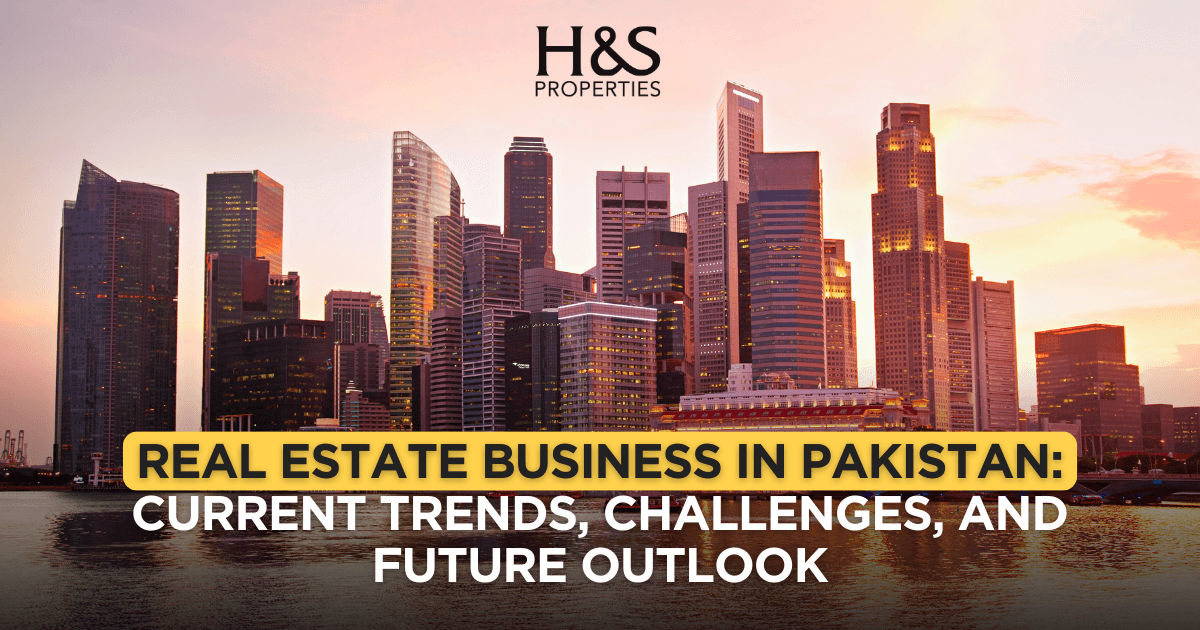
The real estate business in Pakistan has seen significant growth over the past few years, making it one of the country's most lucrative sectors. Whether it's commercial, residential, or industrial, the demand for real estate continues to rise as cities expand and the population grows. Despite challenges, the sector offers investors a wide range of opportunities.
As land becomes scarcer in Pakistan's major cities, developers are moving towards vertical real estate projects. Karachi, Lahore, and Islamabad are witnessing the construction of luxury high-rise apartments, with demand growing for modern, amenity-rich housing. Projects like H&S Residence by H&S Properties reflect this trend, offering fully automated, community-focused living spaces with world-class amenities such as spas, saunas, private cinemas, and infinity pools.
Global trends in sustainability and technology are influencing Pakistan's real estate market. Developers are now incorporating smart technologies, energy-efficient systems, and environmentally friendly materials into their projects. In cities like Lahore and Karachi, there is a rising interest in green buildings that focus on energy efficiency and minimizing environmental impact.
The digital transformation of real estate services in Pakistan has improved transparency and accessibility for investors. Platforms like Zameen.com and Graana.com have revolutionized how people buy, sell, and rent properties by providing virtual tours, real-time market data, and streamlined online payment systems. This digital shift is making it easier for overseas Pakistanis to invest in the country's real estate sector.
The government's push for affordable housing, particularly through the Naya Pakistan Housing Scheme, is addressing the country's housing shortage. Developers are now partnering with the government to meet the growing demand for affordable homes in both urban and rural areas.
While major cities like Karachi, Lahore, and Islamabad dominate the real estate market, secondary cities such as Faisalabad, Multan, and Peshawar are emerging as attractive investment destinations. The government's focus on CPEC is likely to spur real estate growth in secondary cities as infrastructure projects drive economic activity.
Pakistan's growing economy has led to increased demand for commercial properties, particularly in retail and office spaces. Areas like Gulberg in Lahore and Blue Area in Islamabad have become business hotspots. In Karachi, waterfront communities like HMR Waterfront are booming investor confidence - housing unique projects such as H&S Residence built by world-renowned Nikken Sekkei.
With rising affluence among Pakistan's middle and upper-middle classes, there is increasing demand for luxury real estate. Gated communities like DHA and Bahria Town continue to attract buyers looking for modern amenities, security, and exclusivity. Overseas Pakistanis are also significant contributors to this trend.
One of the major challenges investors face in Pakistan's real estate market is the inconsistent regulatory environment. Differences between federal and provincial land authorities can cause delays and create confusion. Opting for developers with a solid track record, like H&S Properties, can help mitigate risks associated with regulatory uncertainty.
Like any emerging market, Pakistan's real estate sector is subject to economic fluctuations. Factors such as inflation, currency devaluation, and changes in interest rates can affect property prices and construction costs. Investors should adopt a long-term approach and consider diversifying their portfolios.
Despite government initiatives, financing remains a significant barrier for many potential buyers and investors. Developers and the government must collaborate to create more accessible financing options, such as installment plans and low-interest mortgages.
Transparency issues, particularly related to property ownership disputes and fraudulent listings, remain a concern in Pakistan. Companies like H&S Properties offer an added layer of security, ensuring that investors can trust the legitimacy of their transactions.
Despite the challenges, the future of Pakistan's real estate market looks promising. Urbanization, infrastructure development, and an increasing demand for housing are expected to drive growth in the sector. As technology continues to transform how real estate transactions are conducted, investors can look forward to a more transparent and efficient market. By staying informed about market trends and working with reliable developers, investors can make the most of the opportunities available in Pakistan's dynamic real estate landscape.
